

The Human Advantage: How Reskilling and AI Mitigate Skills Obsolescence within the MERCOSUR Healthcare System
Author: MSc Victor Piriz Correa, MD, MPH – Seniors International Consulting (SICs™)
Abstract
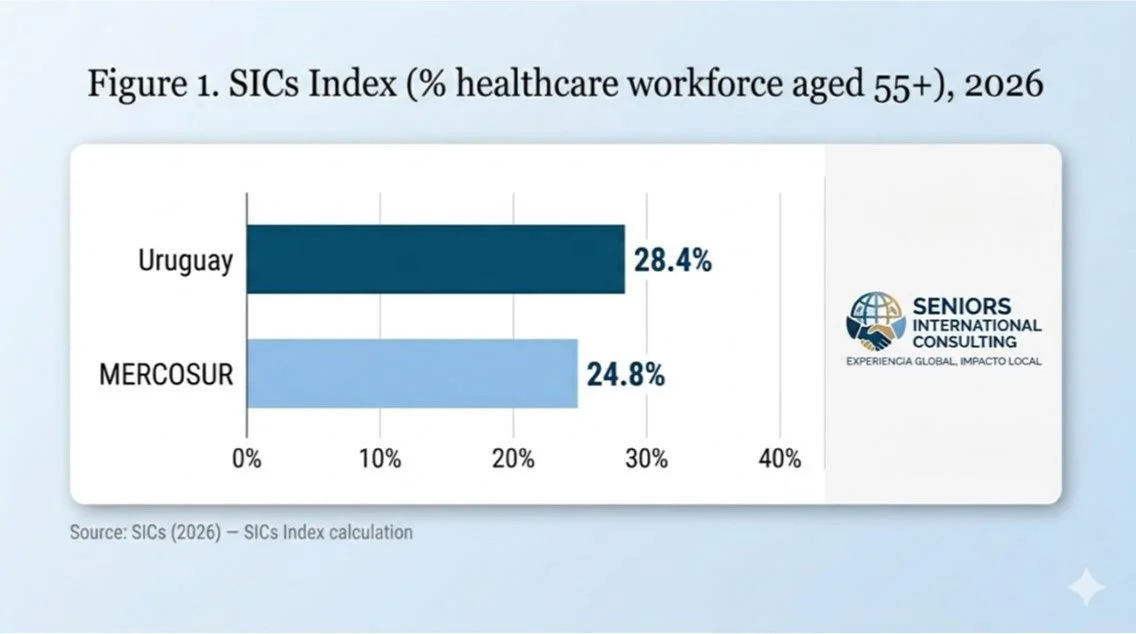
The MERCOSUR region is currently grappling with a sustainability crisis regarding human capital in health, driven by an aging workforce, dwindling replacement rates, and mounting fiscal pressures. This study proposes and evaluates a socio-technical architecture (SICs™) predicated on massive reskilling, People Analytics, and Anticipatory Leadership to preserve "human utility" in clinical care. Methods: The research combines a conceptual descriptive analysis with a country-specific strategic evaluation (Uruguay, Brazil, Argentina, Paraguay), utilizing demographic indicators and an Obsolescence Risk Map. Results: A regional average "SICs Index" of 24.8% was identified for healthcare personnel aged 55 and over, with Uruguay reaching 28.4%. Discussion: AI, framed as an "Invisible Assistant" and "Armor," does not replace the human advantage but rather protects it and codifies expertise, facilitating regional competency mobility. Conclusion: The integration of reskilling, People Analytics, and AI governance constitutes a mandatory strategy to curtail skills obsolescence and ensure institutional survival within MERCOSUR.
Keywords: Human Resources for Health; Reskilling; Artificial Intelligence; People Analytics; Obsolescence; MERCOSUR.
1. Introduction
Introducción
The collision between the technological revolution and demographic reality poses an immediate risk to the operational continuity of MERCOSUR health systems. The aging of the healthcare workforce—evidenced by a regional SICs Index of 24.8% and 28.4% in Uruguay—demands strategies that harmonize advanced technology with human-centric care. This paper delineates the theoretical framework of "New Human Utility" and "Institutional Survival," presenting the SICs™ technical proposal to mitigate obsolescence risks through three axes: Massive Reskilling, People Analytics, and Anticipatory Leadership.
2. Methods
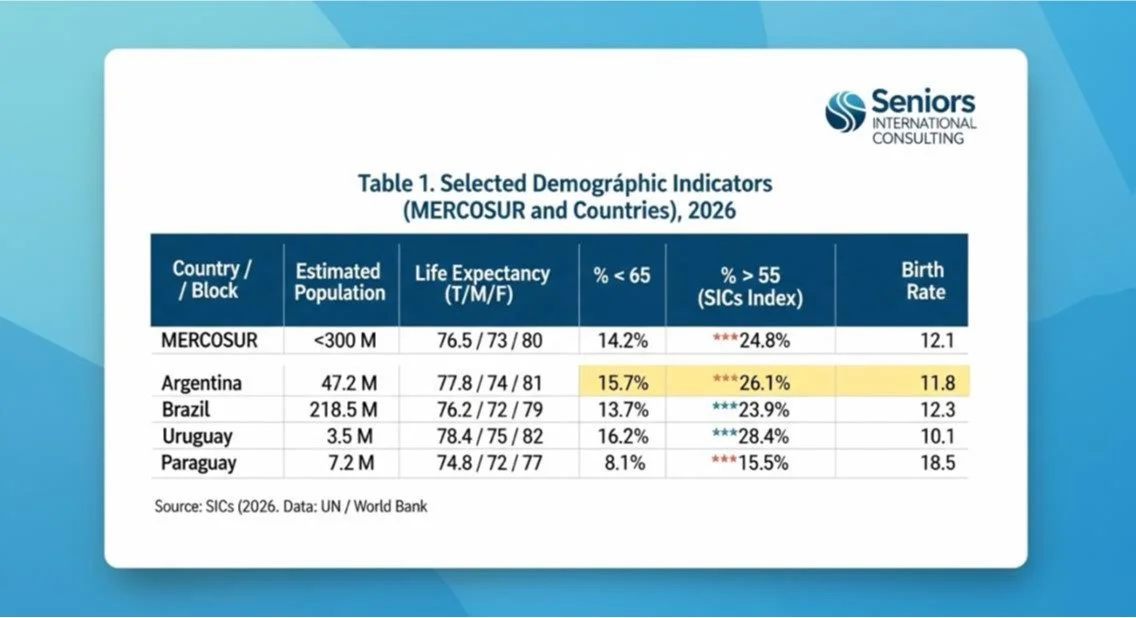
A descriptive and strategic analysis was conducted based on public demographic indicators (UN, World Bank, WHO), supplemented by an internal SICS™ assessment (2026). The 'SICs Index' was operationally defined as the percentage of the healthcare workforce aged over 55 within the analyzed system. Furthermore, an Obsolescence Risk Map was developed per country to propose specific technological and organizational interventions.
3. Context and Architecture by Country
The following selected demographic indicators contextualize the demographic pressure exerted on MERCOSUR healthcare systems.
4. Results
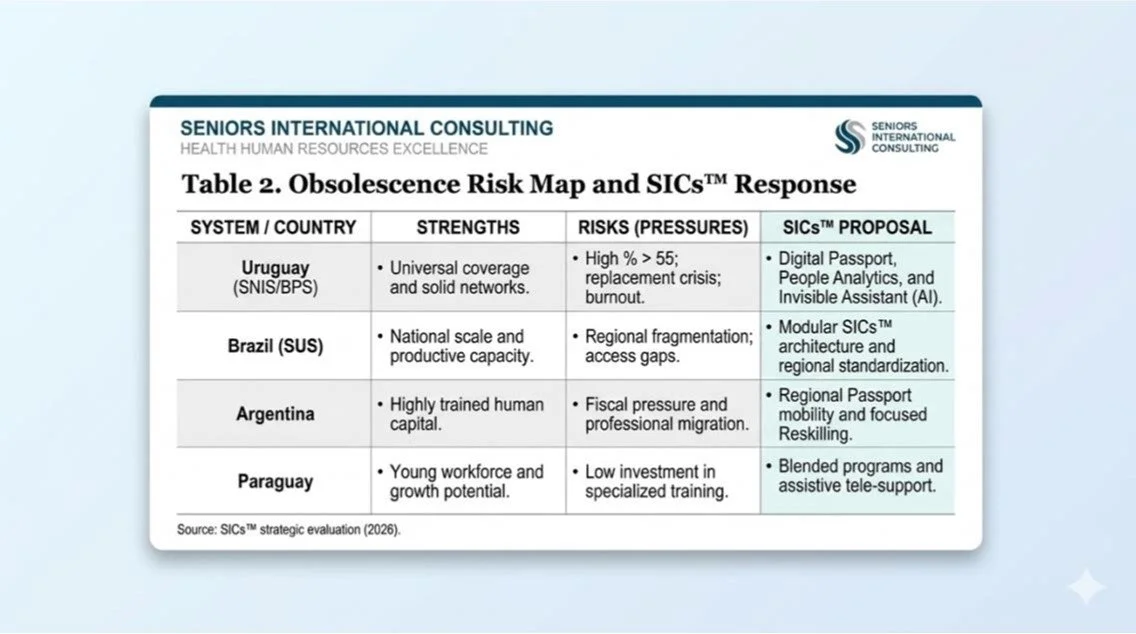
The analysis identifies distinct national variations in demographic pressure and proposes tailored responses. The following Obsolescence Risk Map outlines the strategic SICs™ response.
5. Discussion
The findings demonstrate that the high proportion of healthcare personnel aged 55+ necessitates a fundamental shift in talent governance. The SICs™ proposal conceives AI as an 'Invisible Assistant' and 'Armor' that safeguards mental health and professional status while codifying experience through the Digital Passport.
Implications:
Policies for regional recognition and mobility via the Passport.
Investment in People Analytics for the early detection of burnout.
Hybrid reskilling programs and anticipatory leadership to integrate robotic assistants without dehumanizing clinical care
6. Conclusions
The synergy between reskilling, People Analytics, and ethical AI governance curtails skills obsolescence and bolsters the institutional survival of MERCOSUR. The SICs™ Digital Competencies Passport emerges as a pivotal tool for preserving codified expertise and facilitating labor mobility.
References
Richardson S, Lawrence K, Schoenthaler AM, Mann D. A framework for digital health equity. npj Digital Medicine. 2022.
Worldmeters. Demografía mundial. https://www.worldometers.info/es/demografia/demografia-mundial/ (consultado 2026-01-19).
WRR (Netherlands Scientific Council for Government Policy). Digital government resources. (Accessed 2025).
Johns Hopkins Bloomberg School of Public Health. Highlights of the Digital Healthcare Equity Framework. 2024.
World Health Organization. World Standard Population and Age Standardization. Discussion Paper 31.
United Nations. Ageing and older persons. Projections and analysis (2025).
World Health Organization. Global health workforce deficit reports (2024–2025).
World Bank Group. Health workforce shortages and demographic change. 2024.
PwC. The Fearless Future: Global AI Jobs Barometer 2025.
Whittaker M. AI governance, power and accountability. Signal. 2025.
International Labour Organization. AI, digitalization and occupational health. 2025.
Seniors International Consulting (SICs). Evaluación estratégica y datos SICs Index. Informe interno 2026.