

AI Governance and the True Culture of Execution in 21st‑Century Global Health
By: MSc Victor Piriz Correa MD, MPH. CEO, Seniors International Consulting (SICs™),
Dan Cristal M.A. S.G.M – Director of Governance, Seniors International Consulting (SICs™)
In the global market for senior‑level strategic consulting, institutions frequently fall into a common trap: they assume that mass purchases of commercial software licenses (such as Atlassian Jira or Monday.com) and the accumulation of standardized Project Management Institute (PMI) certifications like PMP, Scrum, or Kanban automatically guarantee the success of an operational roll‑out. The harsh reality on the ground proves otherwise: deadlines lengthen systematically, international teams disconnect, and managers spend 90% of their resources reacting like firefighters to unforeseen crises.
The fundamental problem has never lain in methodology. The problem is the absence of a true project management culture rooted in human behavior and organizational mindset. Organizations that consistently deliver successful public health solutions do not achieve this by using Agile or Waterfall better than their competitors; they succeed because project management becomes the central nervous system through which the firm thinks, plans, communicates, and executes daily.
AI Governance as a Systemic Process
At Seniors International Consulting (SICs™), our horizontal and international structure decisively invests in cutting‑edge tools, ethical frameworks, and rigorous certifications—not to generate bureaucracy, but to establish a transparent model of internal and external governance.
So that our consultants, multilateral clients and the wider world understand how we guarantee repeatable, deviation‑free execution, the AI Governance Dimension for Digital and Institutional Government at SICs™ operates under five mandatory lines of action enshrined in our Institutional Constitution (Book I):
Project Selection and Prioritization Model for AI: Every technological initiative executed by our firm must be submitted to strict acceptance criteria. We evaluate with scientific rigor its purpose, its measurable value contribution to health processes, the public interest it serves, and the real epidemiological need that gives rise to the project.
Comprehensive AI Maturity Model: We constantly evaluate a single indicator that unifies the technical, organizational and human aspects of health systems. This indicator allows auditing the real evolution of AI in public administration and the corporate sector, ensuring risk‑free scaling.
Open Data Quality Standard: We build the analytic foundations of AI on high‑quality, clean and open data, avoiding biases that would undermine health equity in disadvantaged communities.
Monitoring Structure and AI Observatory: We operate an Internal AI Observatory and a real‑time monitor of all active projects in our global portfolio. This single reliable source of information generates automated KPI dashboards and institutional risk records, eradicating operational surprises and allowing us to predict critical budget deviations.
Knowledge Governance and Lessons Learned: We implement a formal validation protocol whereby only operational prompts proven across multiple scenarios and methodological innovations are incorporated into our institutional strategic memory (Master Prompts Manual™). In this way, we capitalize on lessons learned in MENA, Africa and Mercosur contexts, ensuring that ecosystem knowledge is not trapped on personal laptops but reinvested into the success of the next strategic partner.
SICs™ Approach to Mitigating Cultural Friction
Large organizational consultancies such as McKinsey and Gartner often note that process standardization in LATAM, Africa or the MENA region generates severe friction due to clashes of communication styles in high‑context cultures and natural resistance to bureaucratic micromanagement.
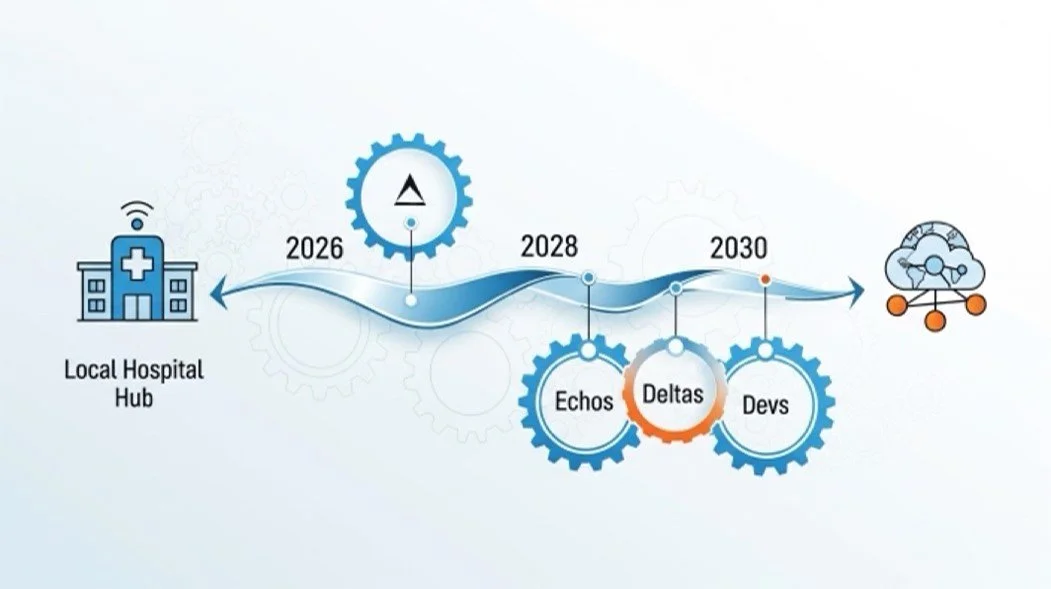
At SICs™ we mitigate this friction at its root through our Horizontal Execution Matrix:
· Mitigating Communication Clash: Recording work asynchronously in tools (Jira or Monday.com) is not a punitive surveillance instrument; it is the mandatory feeding of our central nervous system, the MATÍAS™ Cognitive System. Our senior consultants act as Champions or Echos (Facilitators): they absorb the in‑person, high‑context interactions and diplomatic efforts required by local health authorities, but structure deliverables, risks and timelines asynchronously within the system to safeguard investment traceability.
· Eradicating Micromanagement through Protected Autonomy: Control panels are designed under the premise of sovereign governance. Field teams (Devs) have professional and institutional autonomy over how they adapt interventions to their cultural and geographic reality, provided that critical financial and epidemiological milestones report to the centralized dashboard.
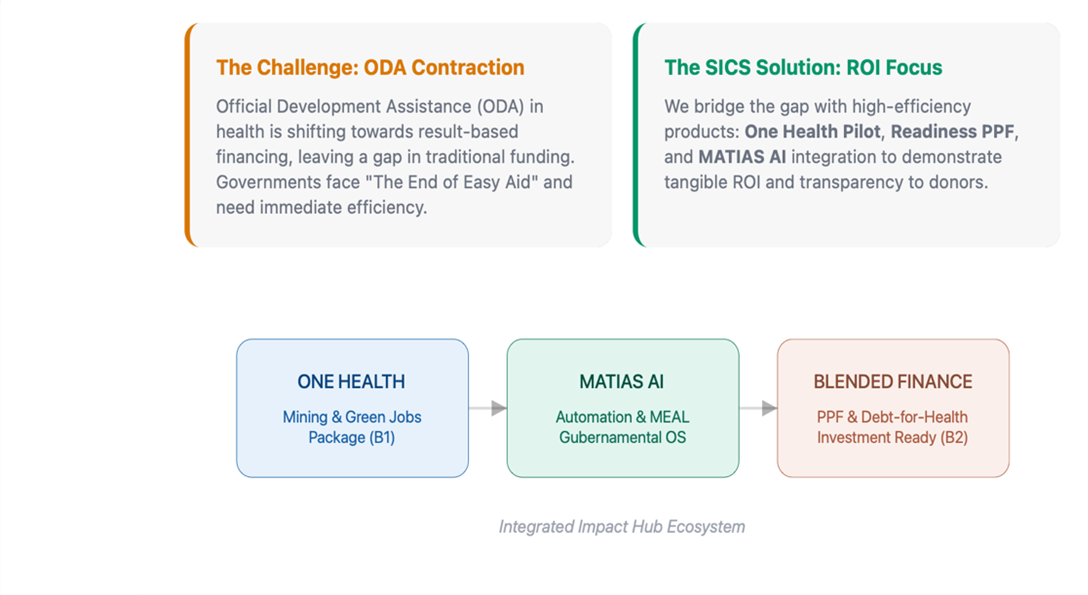
Operational discipline generates predictability and total visibility reduces operational surprises. In the realm of global health and international development in 2026, replacing isolated heroic efforts with standardized, ethical and repeatable systems is the ultimate safeguard to optimize resources, mitigate cost overruns and, fundamentally, save human lives.
At the end of the day the combination of flat organizational structure, highly experienced experts with international experience and local familiarization, trust-based technological platform, supported by real time AI agent (Matias), all this creates not only an innovative approach to lead consultancy processes and manage projects with technological platforms, but a real valuable approach that improves processes, reduce costs and save lives.
References:
Piriz Correa V. Book I – SICs™ Governance 2026: Institutional scaling guide — multi‑project system in scale‑up phase, operational architecture and interaction matrix. Regulatory code: SIC–NI–001–2026. Montevideo: Seniors International Consulting (SICs™); 2026.
Piriz Correa V. AOD & Institutional Immunity Strategy SICS™ 2026: Post‑AOD strategic transition and human‑digital capital deployment plan. Regulatory code: SIC–NI–001–2026 (Version 1.1 - Revised). Montevideo: Seniors International Consulting (SICs™); 2026.
Karp AC. Executive management letter to shareholders on cognition as commodity, operational leverage and artificial intelligence in modern infrastructure. Denver: Palantir Technologies; 2024.
McGovern Foundation. Guiding principles for ethical deployment and governance of responsible artificial intelligence in public health for Global South communities. Boston: McGovern Foundation; 2025.
World Health Organization. Monitoring the building blocks of health systems: a handbook of indicators and their measurement strategies. Geneva: WHO; 2010.
World Bank. Health Works (overview). World Bank; 2024. Available from: https://www.worldbank.org/en/programs/health-works/overview
Pandey S, et al. Translating investments into results: the role of the World Bank in global health. BMJ Global Health. 2025. Available from: https://pmc.ncbi.nlm.nih.gov/articles/PMC12551540/
PAHO. IDB and PAHO Join Forces to Drive Digital Health and Pandemic Preparedness. PAHO; 25 Apr 2024. Available from: https://www.paho.org/en/news/25-4-2024-idb-and-paho-join-forces-drive-digital-health-and-pandemic-preparedness-latin
Inter‑American Development Bank (IDB). Health sector. IDB; 2024. Available from: https://www.iadb.org/en/who-we-are/topics/health
Agence Française de Développement (AFD). Health and Social Protection — Activity report 2024. AFD; 2024. Available from: https://www.afd.fr/en/ressources/sante-protection-sociale-bilan-activite-2024
World Health Organization (WHO). Responding to the health financing emergency. WHO; 2025. Available from: https://www.who.int/news/item/03-11-2025-who-issues-guidance-to-address-drastic-global-health-financing-cuts
World Economic Forum. How AI is transforming health. WEF; 2025. Available from: https://www.weforum.org/
Harvard Business Review. Mitigating the public health impacts of AI data centers. HBR; 2025. Available from: https://hbr.org/2025/11/mitigating-the-public-health-impacts-of-ai-data-centers?language=es
GMV. The new energy equation: data and AI in infrastructure. GMV; 2026. Available from: https://www.gmv.com/es-es/comunicacion/noticias/nueva-ecuacion-energetica-datos-inteligencia-artificial-infraestructuras
Seniors International Consulting (SICS). AOD‑SICs: REGULATORY CODE SIC–NI–001–2026; 2026. (Internal document).
Seniors International Consulting (SICS). Book I – SIC™ Governance 2026. Feb 2026. (Institutional document).
OECD. Building Trust and Reinforcing Democracy: Preparing the Ground for Government Action. Paris: OECD Publishing; 2023.
Davenport TH, Ronanki R. Artificial intelligence for the real world. Harvard Business Review. 2018;96(1):108–116.
World Health Organization. Ethics and governance of artificial intelligence for health. Geneva: WHO; 2021.
Westerman G, Bonnet D, McAfee A. Leading Digital: Turning Technology into Business Transformation. Harvard Business Review Press; 2014.